IELTS overall band score: how rounding works, and can you get 7 with a 6 in Writing?
Most people study all four skills again after a disappointing result. Sometimes half a band in one skill is the whole job. Here is the maths.
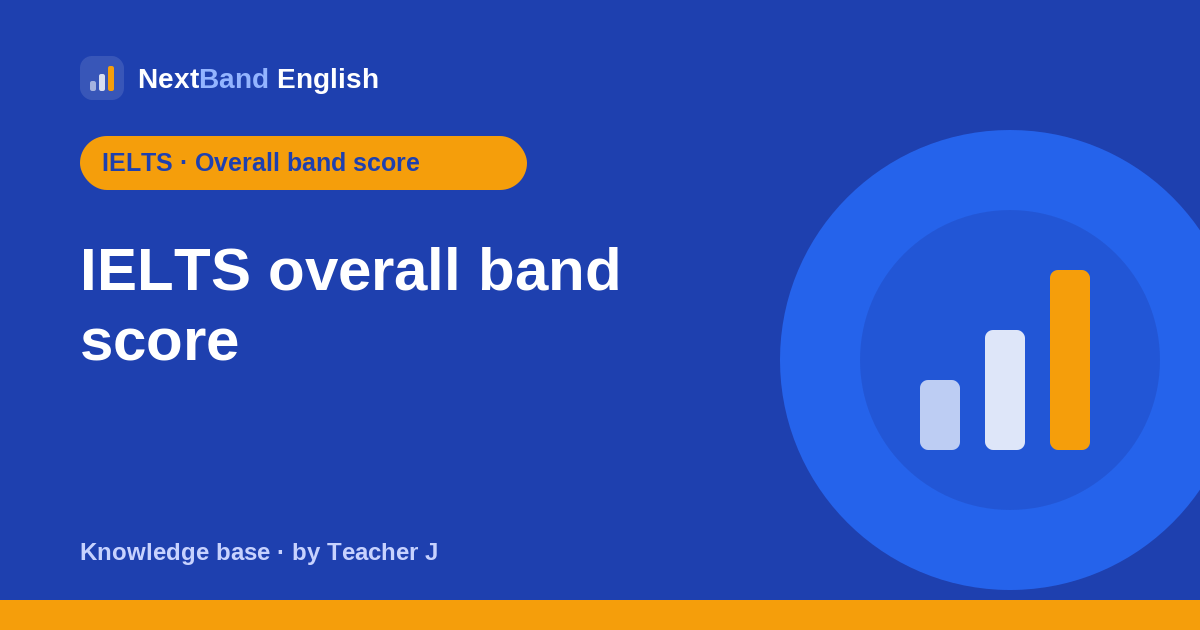
Your overall band is the average of your Listening, Reading, Writing and Speaking scores. Then it is rounded to the nearest half or whole band.
How the rounding works
- If the average ends in .25, it goes up to the next half band. 6.25 becomes 6.5.
- If it ends in .75, it goes up to the next whole band. 6.75 becomes 7.
- Anything below those points goes down. 6.125 becomes 6. 6.625 becomes 6.5.
Can I get 7 overall with a 6 in Writing?
Yes, it can happen. Look at these two students.
Two students, both with 6 in Writing.
The quick rule
With a 6 in Writing, your other three scores need to add up to at least 21 for a 7 overall. For example 7, 7 and 7. That gives an average of 6.75, which rounds up to 7.
Why half a band in one skill matters so much
The first student again: Listening 7, Reading 7, Writing 6, Speaking 6.5.
But check what your goal really needs
Many universities, nursing boards and visas also ask for a minimum in each skill, not just overall. A 7 overall with a 6 in Writing may still not be enough. Read the exact rule for your goal before you plan.
Before you rebook
- Write down your four scores.
- Work out your average, and how much each skill would change it.
- Check the minimum per skill for your university, board or visa.
- Put most of your time into the skill that moves you over the line.
Not sure which skill is holding you back? The Diagnostic shows you, skill by skill, so you study the right thing before you pay the exam fee again.
Exam rules change. Always check with the exam provider and the organisation you are applying to.
Want help with this?
Book a class and we work on it together, build your free roadmap to see where you stand, or ask us a question first.